Author: Alan Dyer / SkySafari 7 Premium
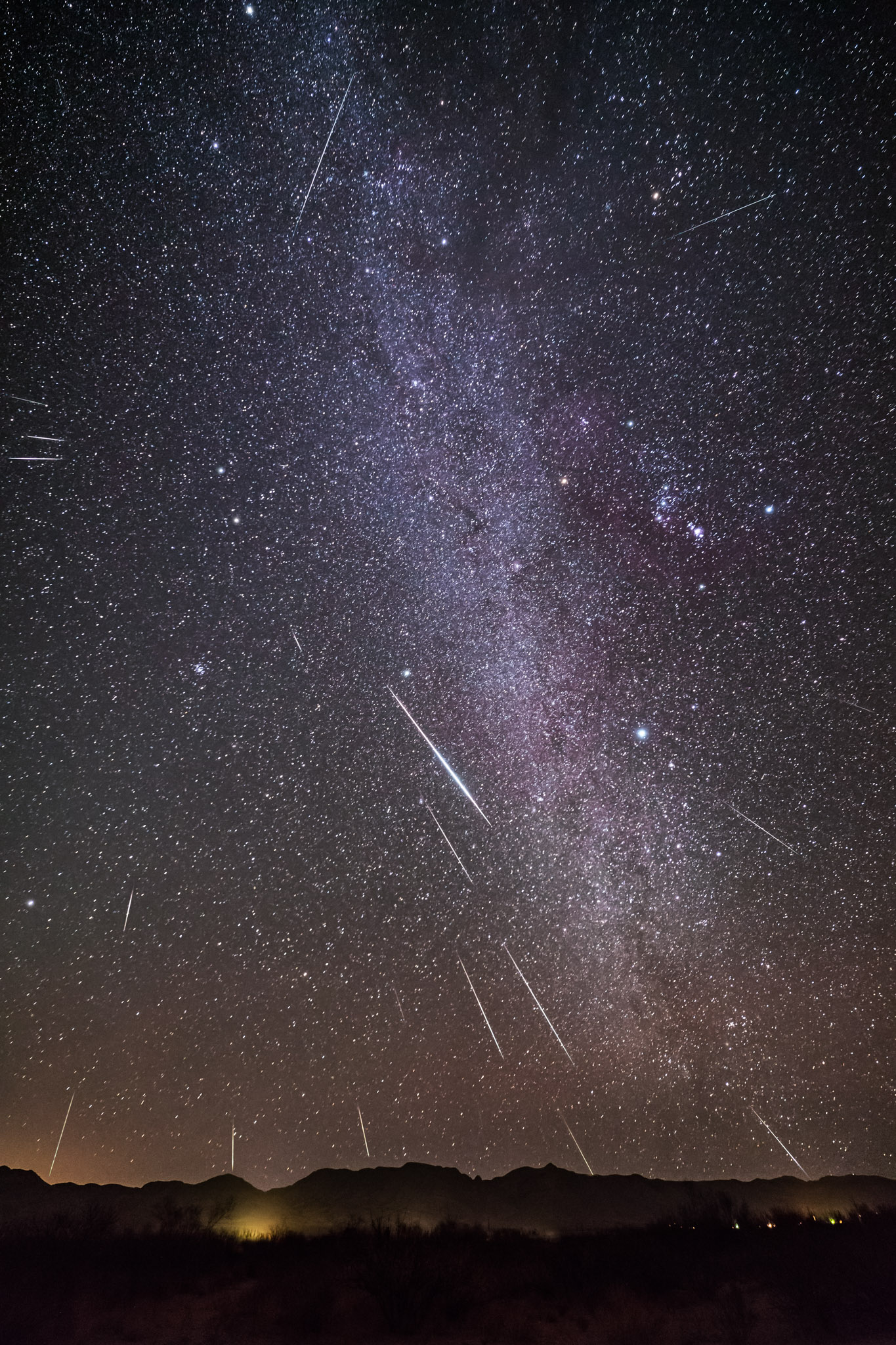
While the Perseids of August get all the attention, the Geminids of December usually perform much better. And this year the circumstances are nearly ideal. The Geminid meteor shower is known for its high rates of about 120 meteors an hour, higher than the 90 for the Perseids. Geminids are slow moving meteors, and are often bright. As shown below in an image from the 2022 Geminids, they can often leave lingering ionized trains of glowing “smoke.”

The SkySafari chart below is for early evening on December 13 at 45° N latitude. It shows the radiant in Gemini – the point where the meteors appear to steak from – rising in the east in the evening. The radiant is in the sky all night, and is highest at local midnight, when the most meteors can be seen under clear, dark skies.

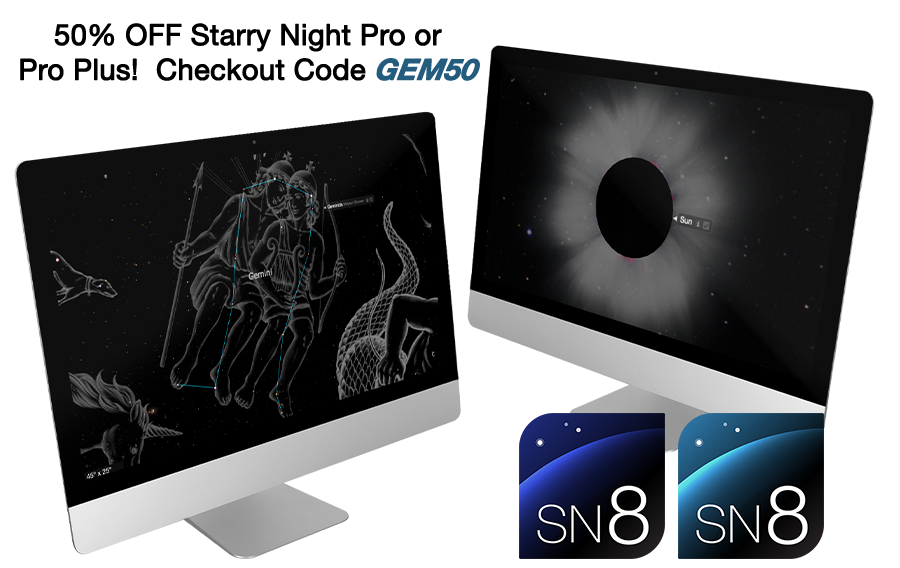
Those circumstances lend themselves to a fine show, even for observers who might only be able to spend an hour or two in the evening for a meteor watch. Good thing, as this year’s Geminids is a mid-week event. The best nights for the Geminids are Wednesday, December 13 and Thursday, December 14, with peak hour expected at 19h UT, or 2 p.m. EST/11 a.m. PST on December 14.
The timing favors observers in the eastern hemisphere, as the shower peaks in daylight for those in the Americas. Nevertheless, those in the western hemisphere should still get a good show on either or both December 13 and 14, providing two good nights as a hedge against clouds. The really good news, however, is that the Moon is just past New, so there’s no moonlight to interfere.
Stay Updated on All Astro Events with SkySafari 7
Up to 50% OFF starting at only $4.99 USD
Tap Below to Download Now -->
While the brightest Geminids can show up under city skies, the best view will require driving to darker skies away from city lights. The cold nights of December demand dressing up well, especially as a meteor watch is done just by lying back and looking up. Have blankets and warm drinks on hand. For those who want to capture a meteor, use a fast, wide-angle lens such as a 14mm to 24mm at f/2 or f/2.8.
Aim toward the winter stars of Gemini and Orion, and use an intervalometer to shoot lots of 20- to 30-second exposures in rapid succession, with no more than 1 to 2 seconds between frames. Out of a few hundred frames you might shoot over two or three hours, several are bound to capture bright meteors. While you can use a camera on a tripod, having the camera on a sky tracker makes it easier to stack images later for a composite showing all the meteors on one frame, as I did above for the 2017 Geminids.
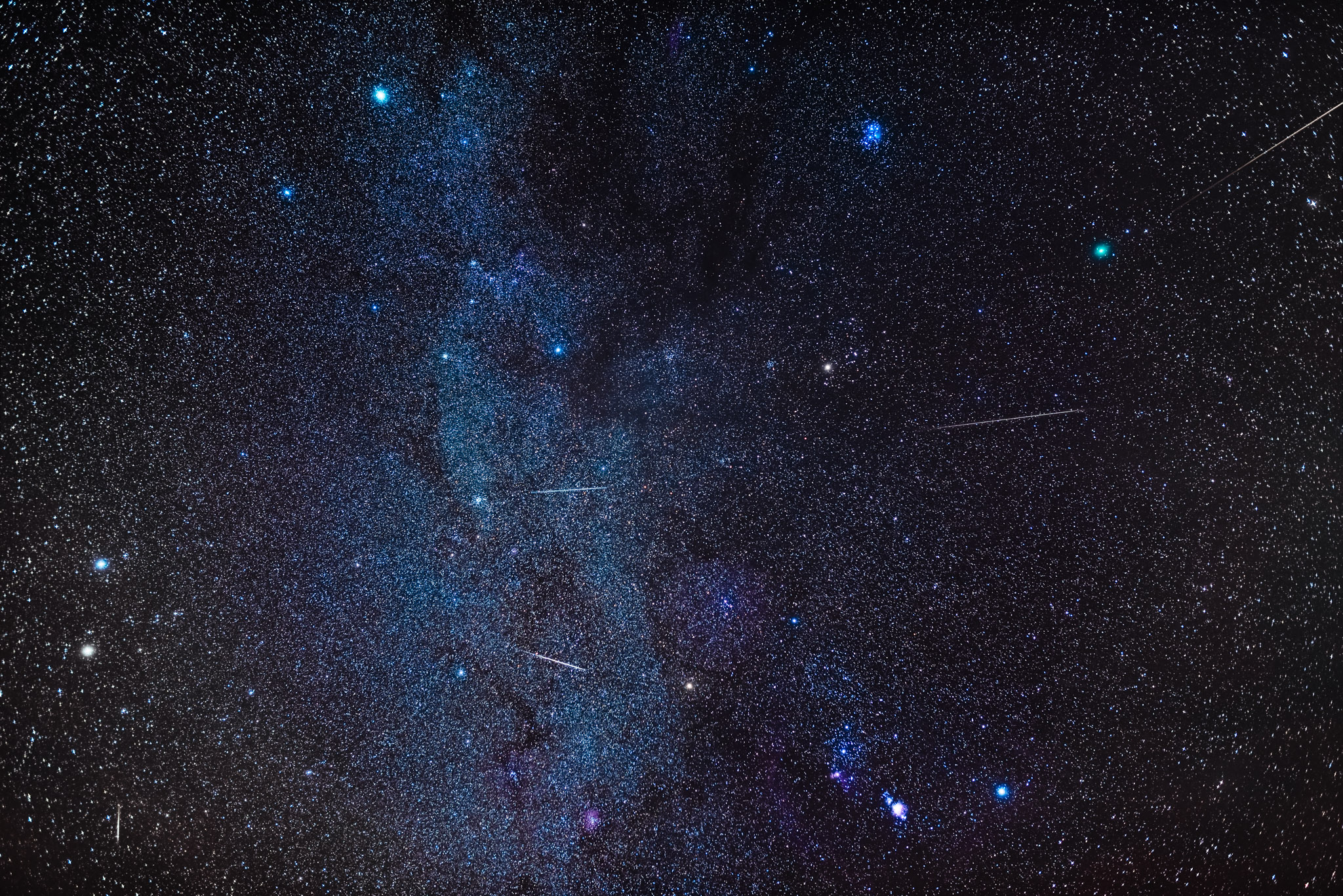
While you are looking for Geminids, keep an eye out for meteors streaking from a spot below the western side of the Square of Pegasus. This year some meteors created by dust from Comet Wirtanen, last seen in late 2018 – it’s the green spot at upper right in the image above – may be visible. Wirtanen meteors may be few in number, but are expected to be slow-moving.

While most meteor showers have their origin in comets casting off dusty material, the Geminids are thought to come from an asteroid, 3200 Phaethon. It behaves like a comet in emitting dust particles that go into orbits around the Sun that are roughly similar to the parent object. As shown above in a diagram from meteorshowers.org , each year in mid-December Earth intercepts this dust stream to give us the Geminids. In 2024 the Geminids will be washed out by the Full Moon. So get out this year to take in the meteor show.